segunda-feira, 6 de maio de 2019

Enlarge this image

Concern is growing about a burgeoning online market for essays that students can buy and turn in as their own work. And schools are trying new tools to catch it. Angela Hsieh/NPR hide caption

toggle caption Angela Hsieh/NPR
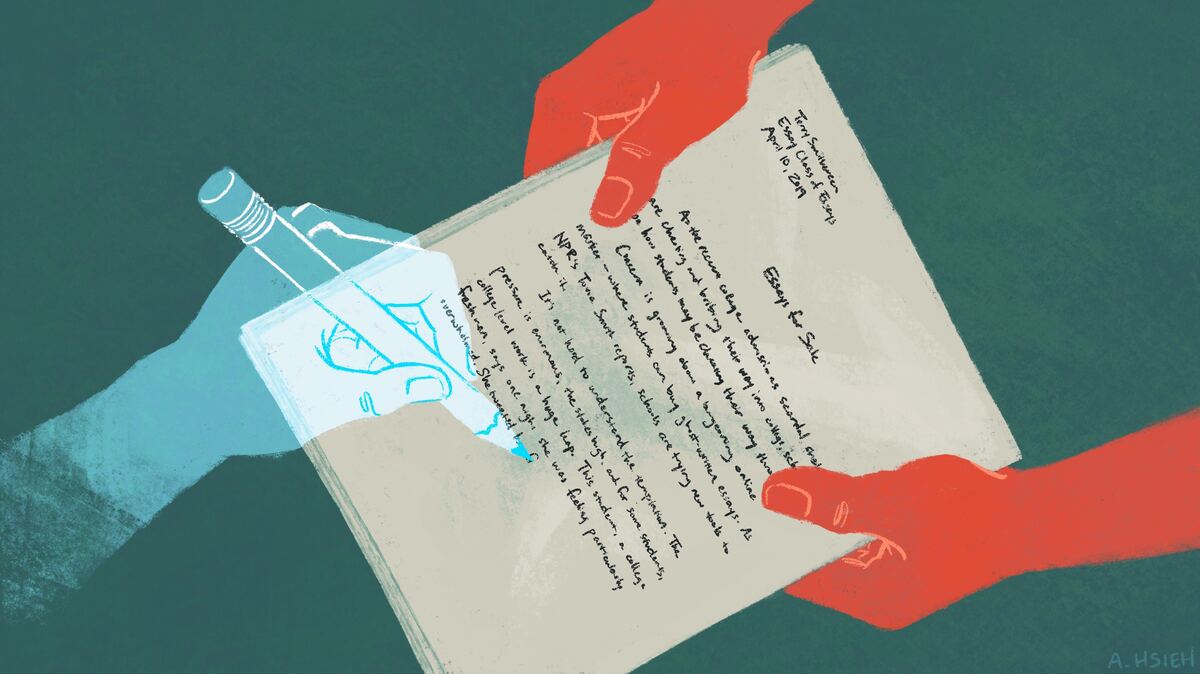
Concern is growing about a burgeoning online market for essays that students can buy and turn in as their own work. And schools are trying new tools to catch it.

Angela Hsieh/NPR

As the recent college admissions scandal is shedding light on how parents are cheating and bribing their children's way into college, schools are also focusing on how some students may be cheating their way through college. Concern is growing about a burgeoning online market that makes it easier than ever for students to buy essays written by others to turn in as their own work. And schools are trying new tools to catch it.

It's not hard to understand the temptation for students. The pressure is enormous, the stakes are high and, for some, writing at a college level is a huge leap.

"We didn't really have a format to follow, so I was kind of lost on what to do," says one college freshman, who struggled recently with an English assignment. One night, when she was feeling particularly overwhelmed, she tweeted her frustration.

"It was like, 'Someone, please help me write my essay!' " she recalls. She ended her tweet with a crying emoji. Within a few minutes, she had a half-dozen offers of help.

"I can write it for you," they tweeted back. "Send us the prompt!"

The student, who asked that her name not be used for fear of repercussions at school, chose one that asked for $10 per page, and she breathed a sigh of relief.

"For me, it was just that the work was piling up," she explains. "As soon as I finish some big assignment, I get assigned more things, more homework for math, more homework for English. Some papers have to be six or 10 pages long. ... And even though I do my best to manage, the deadlines come closer and closer, and it's just ... the pressure."

In the cat-and-mouse game of academic cheating, students these days know that if they plagiarize, they're likely to get caught by computer programs that automatically compare essays against a massive database of other writings. So now, buying an original essay can seem like a good workaround.

"Technically, I don't think it's cheating," the student says. "Because you're paying someone to write an essay, which they don't plagiarize, and they write everything on their own."

Her logic, of course, ignores the question of whether she's plagiarizing. When pressed, she begins to stammer.

"That's just a difficult question to answer," she says. "I don't know how to feel about that. It's kind of like a gray area. It's maybe on the edge, kind of?"

Besides she adds, she probably won't use all of it.

Other students justify essay buying as the only way to keep up. They figure that everyone is doing it one way or another — whether they're purchasing help online or getting it from family or friends.

"Oh yeah, collaboration at its finest," cracks Boston University freshman Grace Saathoff. While she says she would never do it herself, she's not really fazed by others doing it. She agrees with her friends that it has pretty much become socially acceptable.

"I have a friend who writes essays and sells them," says Danielle Delafuente, another Boston University freshman. "And my other friend buys them. He's just like, 'I can't handle it. I have five papers at once. I need her to do two of them, and I'll do the other three.' It's a time management thing."

The war on contract cheating

"It breaks my heart that this is where we're at," sighs Ashley Finley, senior adviser to the president for the Association of American Colleges and Universities. She says campuses are abuzz about how to curb the rise in what they call contract cheating. Obviously, students buying essays is not new, but Finley says that what used to be mostly limited to small-scale side hustles has mushroomed on the internet to become a global industry of so-called essay mills. Hard numbers are difficult to come by, but research suggests that up to 16 percent of students have paid someone to do their work and that the number is rising.

"Definitely, this is really getting more and more serious," Finley says. "It's part of the brave new world for sure."

The essay mills market aggressively online, with slickly produced videos inviting students to "Get instant help with your assignment" and imploring them: "Don't lag behind," "Join the majority" and "Don't worry, be happy."

"They're very crafty," says Tricia Bertram Gallant, director of the Academic Integrity Office at the University of California in San Diego and a board member of the International Center for Academic Integrity.

The companies are equally brazen offline — leafleting on campuses, posting flyers in toilet stalls and flying banners over Florida beaches during spring break. Companies have also been known to bait students with emails that look like they're from official college help centers. And they pay social media influencers to sing the praises of their services, and they post testimonials from people they say are happy customers.

"I hired a service to write my paper and I got a 90 on it!" gloats one. "Save your time, and have extra time to party!" advises another.

"It's very much a seduction," says Bertram Gallant. "So you can maybe see why students could get drawn into the contract cheating world."

YouTube has been cracking down on essay mills; it says it has pulled thousands of videos that violate its policies against promoting dishonest behavior.

But new videos constantly pop up, and their hard sell flies in the face of their small-print warnings that their essays should be used only as a guide, not a final product.

Several essay mills declined or didn't respond to requests to be interviewed by NPR. But one answered questions by email and offered up one of its writers to explain her role in the company, called EduBirdie.

"Yes, just like the little birdie that's there to help you in your education," explains April Short, a former grade school teacher from Australia who's now based in Philadelphia. She has been writing for a year and a half for the company, which bills itself as a "professional essay writing service for students who can't even."

Some students just want some "foundational research" to get started or a little "polish" to finish up, Short says. But the idea that many others may be taking a paper written completely by her and turning it in as their own doesn't keep her up at night.

"These kids are so time poor," she says, and they're "missing out on opportunities of travel and internships because they're studying and writing papers." Relieving students of some of that burden, she figures, allows them to become more "well-rounded."

"I don't necessarily think that being able to create an essay is going to be a defining factor in a very long career, so it's not something that bothers me," says Short. Indeed, she thinks students who hire writers are demonstrating resourcefulness and creativity. "I actually applaud students that look for options to get the job done and get it done well," she says.

"This just shows you the extent of our ability to rationalize all kinds of bad things we do," sighs Dan Ariely, professor of psychology and behavioral economics at Duke University. The rise in contract cheating is especially worrisome, he says, because when it comes to dishonest behavior, more begets more. As he puts it, it's not just about "a few bad apples."

Felicity Huffman And 12 Other Parents To Plead Guilty In College Cheating Scandal Law Felicity Huffman And 12 Other Parents To Plead Guilty In College Cheating Scandal

"Instead, what we have is a lot ... of blemished apples, and we take our cues for our behavior from the social world around us," he says. "We know officially what is right and what's wrong. But really what's driving our behavior is what we see others around us doing" or, Ariely adds, what we perceive them to be doing. So even the proliferation of advertising for essays mills can have a pernicious effect, he says, by fueling the perception that "everyone's doing it."

A few nations have recently proposed or passed laws outlawing essay mills, and more than a dozen U.S. states have laws on the books against them. But prosecuting essay mills, which are often based overseas in Pakistan, Kenya and Ukraine, for example, is complicated. And most educators are loath to criminalize students' behavior.

"Yes, they're serious mistakes. They're egregious mistakes," says Cath Ellis, an associate dean and integrity officer at the University of New South Wales, where students were among the hundreds alleged to have bought essays in a massive scandal in Australia in 2014.

"But we're educational institutions," she adds. "We've got to give students the opportunity to learn from these mistakes. That's our responsibility. And that's better in our hands than in the hands of the police and the courts."

Staying one step ahead

In the war on contract cheating, some schools see new technology as their best weapon and their best shot to stay one step ahead of unscrupulous students. The company that makes the Turnitin plagiarism detection software has just upped its game with a new program called Authorship Investigate.

The software first inspects a document's metadata, like when it was created, by whom it was created and how many times it was reopened and re-edited. Turnitin's vice president for product management, Bill Loller, says sometimes it's as simple as looking at the document's name. Essay mills typically name their documents something like "Order Number 123," and students have been known to actually submit it that way. "You would be amazed at how frequently that happens," says Loller.

Using cutting-edge linguistic forensics, the software also evaluates the level of writing and its style.

"Think of it as a writing fingerprint," Loller says. The software looks at hundreds of telltale characteristics of an essay, like whether the author double spaces after a period or writes with Oxford commas or semicolons. It all gets instantly compared against a student's other work, and, Loller says, suspicions can be confirmed — or alleviated — in minutes.

"At the end of the day, you get to a really good determination on whether the student wrote what they submitted or not," he says, "and you get it really quickly."

Coventry University in the U.K. has been testing out a beta version of the software, and Irene Glendinning, the school's academic manager for student experience, agrees that the software has the potential to give schools a leg up on cheating students. After the software is officially adopted, "we'll see a spike in the number of cases we find, and we'll have a very hard few years," she says. "But then the message will get through to students that we've got the tools now to find these things out." Then, Glendinning hopes, students might consider contract cheating to be as risky as plagiarizing.

In the meantime, schools are trying to spread the word that buying essays is risky in other ways as well.

Professor Ariely says that when he posed as a student and ordered papers from several companies, much of it was "gibberish" and about a third of it was actually plagiarized.

Even worse, when he complained to the company and demanded his money back, they resorted to blackmail. Still believing him to be a student, the company threatened to tell his school he was cheating. Others say companies have also attempted to shake down students for more money, threatening to rat them out if they didn't pay up.

The lesson, Ariely says, is "buyer beware."

But ultimately, experts say, many desperate students may not be deterred by the risks — whether from shady businesses or from new technology.

Bertram Gallant, of UC San Diego, says the right way to dissuade students from buying essays is to remind them why it's wrong.

"If we engage in a technological arms race with the students, we won't win," she says. "What are we going to do when Google glasses start to look like regular glasses and a student wears them into an exam? Are we going to tell them they can't wear their glasses because we're afraid they might be sending the exam out to someone else who is sending them back the answers?"

The solution, Bertram Gallant says, has to be about "creating a culture where integrity and ethics matter" and where education is valued more than grades. Only then will students believe that cheating on essays is only cheating themselves.

This story is about Cowboys

Published 1d

Dallas Cowboys offensive guard Connor Williams (52) jogs out for warmups before their NFC Divisional Playoff game against the Los Angeles Rams at Los Angeles Memorial Coliseum in Los    Angeles, Saturday, January 12, 2019. (Tom Fox/The Dallas Morning News)

Tom Fox/Staff Photographer

Dallas Cowboys offensive guard Connor Williams (52) jogs out for warmups before their NFC Divisional Playoff game against the Los Angeles Rams at Los Angeles Memorial Coliseum in Los Angeles, Saturday, January 12, 2019. (Tom Fox/The Dallas Morning News)

By SportsDayDFW.com Contact SportsDayDFW.com on Twitter:

Editor's note: This story has been updated. 

The Cowboys selected former Texas and Coppell offensive lineman Connor Williams with the No. 50 pick in the 2018 NFL draft. Here are 10 things you might not know about Williams. 

The basics

Connor Williams was born in Coppell, Texas. He attended Coppell High School and was an instant starter at the University of Texas under former head coach Charlie Strong. Williams is a 6-5, 296-pound offensive lineman. 

His bullying story

Williams' personal story with bullying gained traction before the NFL draft. Williams was bullied growing up, and began discussing his story more and more. He penned an essay to his bullies before the NFL draft, thanking them for helping make him who he is today. Here's an excerpt from the essay:

"It was something I had to go through. It built me in ways unimaginable. I am thankful I was the kid being bullied, and not the bully.

"And, just a few months away from finding out where my NFL career will start, my gratitude is overflowing for all of you and everything ya'll put me through during my formative years.

"My fear is that with this letter I will receive sympathy from you and others who read it. But I want none of that.

"What you have done for me can never be repaid. While I wouldn't wish it on anyone else, I most certainly wouldn't be in the position I am without you.

"You taught me about humility."

So what does Williams think about his experience with bullying gaining so much attention?

"It's been incredible," Williams said in a recent phone interview. "It's been more than I imagined. So many people are reaching out to me on all platforms, thanking me for my bravery to be able to speak out about it. They shared similar experiences, and even parents had been able to tell that story to their kids and that it provided at least some kind of comfort.

"It's something I couldn't even imagine. It's been such a rewarding thing."

Hometown hero

Being drafted by the Cowboys is a homecoming for Williams. He went to Coppell High School before attending the University of Texas. He was named to the 6A all-state second team in senior year with the Coppell Cowboys. 

Injury-plagued 2017

Williams' final season at Texas was marred by injury. Williams started five games for the Longhorns in 2017 but missed seven due to a knee injury. He even missed Texas' bowl game against Missouri to end the season. 

But, according to his Twitter, it looks like his recovery is going just fine. 

Yeah, he can block

When Williams is healthy he's a force to be reckoned with. Just check out this highlight of him destroying a guy against West Virginia. That poor, poor Mountaineer.

A controversial prospect?

It appears most think the Cowboys got a steal in getting Williams in the second round -- Williams was projected by some people to be a first-round pick. 

But WalterFootball.com called Williams' one of the most controversial prospects of the 2018 draft:

"Williams is one of the most controversial prospects in the 2018 NFL Draft. He is loved by some in the media and has received a lot of hype. Some teams have him higher, but multiple teams have told me that they graded Williams in the mid-rounds. Williams is a love/hate prospect with a big range on where he could get selected."

Read more scouting reports on Williams here. 

Used to play a different position

Williams wasn't always an offensive lineman. He started his Coppell football career playing tight end before switching to offensive tackle. 

One of his first battles came against teammate Solomon Thomas -- who went on to become the third overall pick in the 2017 NFL draft. Sports Illustrated's Bruce Feldman detailed Williams' bout with Thomas. 

Williams had just been shifted from tight end to offensive tackle, and his coach called his name during one-on-one drills against the team's defensive linemen. Williams was set to match up in pass protection against the team's best player, an upperclassman who had scholarship offers from all over the country, a guy who would soon become an All-America at Stanford and the third pick in the 2017 NFL draft: Solomon Thomas.

"Coach puts me out there. I'm like, 'Oh my gosh, I'm going to have to go up against Solomon Thomas?! Why did you do this to me?' " Williams recalls.

But Williams won the rep, neutralizing the future Stanford great. He doesn't even remember what Thomas tried to do on that snap or really how he dealt with it. What he does remember is what came next:

"My coach is hyping me up and the D-line coach is yelling at him. They said 'Go!' again and I go into my pass set and he just runs me over and I'm on my back. He just ran right through me. It was eye-opening.

"Going to Texas, I thought everybody would be a Solomon Thomas."

Snapping a Texas drought

Williams snapped a shocking drought for the Longhorns. He is the first Texas offensive lineman to be selected in the NFL draft since 2008 when Tony Hills was picked by the Pittsburgh Steelers. 

Schitt's Creek and The Office??

Apparantly Williams' thinks the Netflix show Schitt's Creek is "right up there" with The Office. From Fansided's Patrick Schmidt:

"When he's not working on his game, studying in the classroom or spending time with his family, he's watching Schitt's Creek on Netflix, which he thinks is right up there with The Office and cites Remember the Titans as his favorite football movie.

"And to the team that drafts Williams, he has a message to all their fans who wonder what type of player and person they'll have.

""They'll know what they're getting because I'll be showing up the next day with an eager, open mind ready to start from the bottom and work my way to be able to help the team. Not a day goes by I'm not going to put forth 100 percent effort.""

He's pretty smart, too

William's was talented on the football field and in the classroom. He attended the McCombs School of Business while at Texas. He was named to the Big 12's All Academic second team last year and was on the Academic All Big 12 rookie team in 2015. 

From Brian Davis of the Austin American-Statesman:

"But Williams did all of that while maintaining a 3.5 grade point average for a year and a half, thus earning a ticket into UT's prestigious McCombs School of Business. Last anyone checked, they do not allow slouches into those hallowed halls.

"'He was pretty proud of that. I was proud of that,' said Jimmy Williams, Connor's father.

"How'd he do it? Well, Connor Williams has always been one of those people who thrive when challenged, his father said. 'We told Connor, once you make a C, you're probably not getting into the business school," Jimmy Williams said. 'So he kind of knew what he was up against.'"

Bonus: Rookie season in Dallas

Williams was the Cowboys primary starter at left guard in 2018. He suffered a knee injury and was replaced by Xavier Su'a-Filo. However, Williams regained his starting spot for the postseason. 

Pro Football Focus graded Williams' rookie year a 57.3, which is an average grade for a guard. 

As for Year 2? Cowboys executive vice president Stephen Jones has high expectations for the lineman.

"My understanding back here is that (Connor Williams) is taking some huge steps in terms of his strength, his size, and some of the things that he was a little short on," Jones said on 105.3 The Fan [KRLD-FM] this offseason. "In terms of his play last year, he's really focused on improving those areas. Football is very important to him. He loves the game and my understanding is that he's put on some really good weight, added some really good strength, and I think he can make a really big jump."

This Topic is Missing Your Voice. View Comments

Photo by Jacob Andrew.

This Is Fine. is a weekly newsletter about the previously private and highly personal tactics people use to make the world less harrowing. In this week's letter, Michelle Lhooq writes about how streamlining her substance use made her feel better about partyingâ€"and everything else. Sign up here to receive a new essay about a dealing-with-life strategy from Broadly and This Is Fine. each Sunday evening.

I moved to California to save myself, although I didn’t realize this until much later. All I knew was I was sick and tired and something buried inside me was screaming. The details of my story are specific, but the archetype should be familiar: I’d arrived in New York as a bright-eyed college kid, and after a decade of gruesome grinding, I parlayed my Ivy League pedigree and party girl lifestyle into my dream job as a music journalist at VICE. This gave me the perfect alibi to immerse myself into freaky rave subcultures all over the worldâ€"every party was field research, every marathon night an anthropological spree. But you know how this story goes: New York makes your dreams come true, and then those dreams start to kill you.

People used to ask me how I did itâ€"work in the office for 12 hours, and then hit the dancefloor till dawn. The answer I would always give with a bitter chuckle was: DRUGS. When you do lots of drugs over a long period of time you start to understand their contours, and their distinct personalities feel like old friends. And after endless nights of hardcore hedonism, I became disillusioned by the company I was keeping. MDMA’s idiot grin felt like a lie. The indulgence of cocaine was disgustingâ€"like a chattering egomaniac spraying you in spit. Opiates felt like checking out into meaningless blankness. Only psychedelics remained profoundly interestingâ€"at least the void of a k-hole loops back into infinity, gesturing towards some larger ineffable meaning. Still, I kept up the tightrope walk of high-achieving hedonism, modulating my body with carefully calibrated drug cocktailsâ€"something to come up, something to come down, repeat ad nauseam.

(Here, I want to pause and note that I don’t believe in drug exceptionalismâ€"that some substances are inherently “better” than others. These observations are specific to my journey, and I have zero judgement towards those who self-medicate with ketamine for depression, for example, or find deep empathetic connection on MDMA.)

One Friday, I rolled into the office and discovered that the golden chains of my privileged hell had been cut: My job had been liquidated in the latest bloody round of media layoffs, and I was free to do whatever I pleased. So I moved to Los Angeles to witness the legal cannabis revolution and write a book about it. At first, I carried around my destructive habits like old baggage, but after a while, to put it plainly, California changed me. Because here’s the thing: The fizzy adrenaline of uppers do not allow you to appreciate the slow wash of sunlight on your skin. When you’re strung out, every inhalation triggers a craving for a cigarette instead of fresh air. Every minute is so pregnant with possibilities for more spikes of manufactured pleasure that even an idle second is tortureâ€"and an hour-long car ride becomes hell. And so the sublime natural beauty and slower rhythms of my new city encouraged me to try a radical way of living.

I decided to quit all drugs, including alcohol, except weed and psychedelics for a year. (Psychedelics encompass a wide spectrum of drugs, but for my purposes, I’m limiting them to LSD, psilocybin, DMT/ayahuasca, and other trippy varietals; I am definitely not doing molly.) I call this “Cali sober,” a term some people also use when they quit everything but weed. I’d experimented with month-long stints of total sobriety before, so I knew I could survive it.

Before going Cali sober, I was doing pretty much any drug handed to me. Alcohol was the easiest to quitâ€"most experienced ravers barely drink anyway (it makes you tired and go home early). Adderall was the hardest because it had become so wired into the way that I worked. For that exact reason, it had become my biggest secret and shame: As a writer, I could never escape the nagging sense that I’d cheatedâ€"that my words were lies because they were forced out of some chemical mania, not my own psyche.

When I quit, I very quickly noticed changes that kept me going. My skin cleared up, and my friends told me I was glowing. As the muscles that had been bound by the taut grip of amphetamine started to relax, I could feel my whole body unwinding. And I know this sounds absurdly California New Age hippie, but I could almost feel my chakras openingâ€"my creativity felt easy and natural, and my instincts sharpened into intuition.

The truth is that I will always love drugs and ravingâ€"and a future without either would be spiritually unfulfilling. Being Cali sober allows me to keep my feet in both subcultures, while its parameters make it easier not to cave to temptation. I am able to take from these experiences what I’m looking forâ€"mind-expansion, self-exploration, empathetic connection, sensorial amplificationâ€"without the addiction and selfishness, and other types of ugliness that I associate with many non-psychedelic drugs.

It’s not always easy. Psychedelics can push you to deal with the traumas you were relying on drugs to distract you from; as they unplug the blockages in your brain, the buried gunk rises to the surface. I’m also gaining weight, often stuffing my face with food to combat stress when, in the past, I’d reach for a pill. Some things make it easier: My friend recently started an email chain for people in the music scene struggling with addictionâ€"a virtual AA for ravers. I am often struck by the similarities between our strugglesâ€"the journey I’m on is actually a well-worn path.

For More Stories Like This, Subscribe to This Is Fine. Here

Ultimately, this mode of being feels like a radical self-experiment, except I am tweaking my body’s neurochemistry through removing substances, instead of adding them. After more than a decade of reckless self-indulgence, being Cali sober is the ultimate trip.

Fashion's biggest night is going down Monday on the Upper East Side.

Per tradition, the Met Gala — alternately known as the Costume Institute Benefit — will be taking place on the first Monday of May at the Metropolitan Museum of Art.

Lady Gaga and Harry Styles will be co-hosting the gala, which has pivoted fully secular from 2019's Catholic-themed "Heavenly Bodies" to this year's: "Camp."

Sure, stars have been sporting campy looks at the bash for years, but this year, it's the official dress code.

Launched in 1948 as a midnight supper which cost $50 a head, today Gala tickets are reported to go for $35,000, and tables for $300,000. The event is invite-only, but Met members can visit the "Camp: Notes on Fashion" exhibit beginning Tuesday at 10 a.m. The general public is invited starting Thursday at 1000 Fifth Ave.

Here's everything to know for tomorrow night:

What time does it start?

Pre-show programming begins at 5 p.m. EST on Monday, May 6, but celebrities tend to arrive on the red carpet closer to 7 p.m.

How to stream

Not all of the bash will be televised, but E!'s "Live From the Red Carpet," will broadcast four hours of star-spangled programming. Watch on Hulu Live TV if you don't have a TV. Vogue's Twitter, Youtube and Facebook livestreams will also likely pop-up the night of — along with Instagram Stories from celebs.

Red carpet arrivals

Tune in at 7 p.m. for the main show.

What is 'Camp'?

Inspired by cultural critic Susan Sontag's Oscar Wilde-dedicated, 1964 essay "Notes on 'Camp'," the night is dedicated to being over-the-top and tongue-in-cheek-chic.

"Camp has deep historical precedent," a narrator says in the Met's video on the concept. "Camp is a woman walking around in a dress made of three million feathers," says the narrator, referencing both a line from Sontag's essay and how Anna Wintour, who's been overseeing the event since 1995, has described her outfit this year.

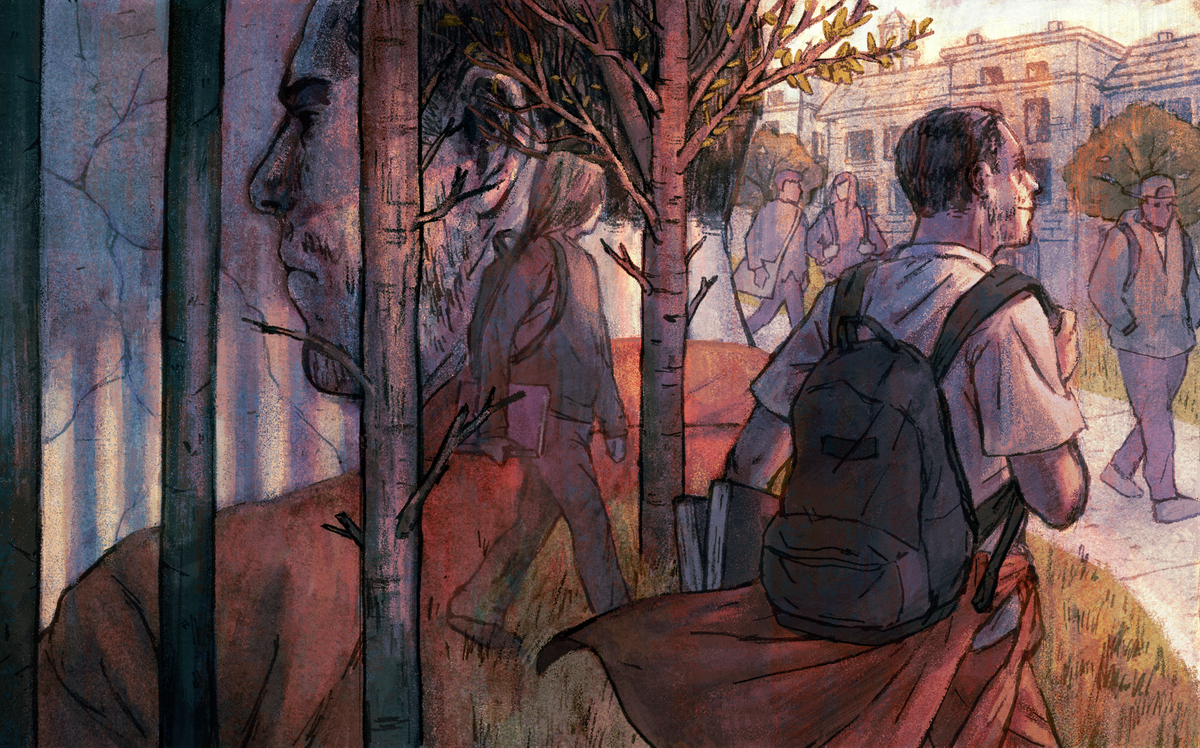
Prison re-entry programs are helping newly released men and women find courage to join the work force.Enlarge this image Anke Gladnick for NPR Prison re-entry programs are helping newly released men and women find courage to join the work force. Anke Gladnick for NPR
Raymond Tillman spent most of his adolescence and early adulthood behind bars. His last release — after three stints inside — was in 2011. When he got out, he had a lot to catch up on — like, the digital age.

"When I first came home I was illiterate to technology," he explains. "Didn't know how to turn on a computer, let alone what an email was." But he needed a job, and to get one, he'd need to be able to apply online.

A parole officer suggested Tillman go to the Cal State San Bernardino Reentry Initiative, a promising new program designed to smooth the transition from offender back to citizen. A big portion of the U.S.'s record-setting prison population is re-offenders, so re-entry centers work to get those numbers down by helping people on parole get the tools they need to function in society — so they eventually stay out of prison. Programs are like a bridge, between the world of corrections and the world of social services.

At other times in Raymond Tillman's life, he would have blown this off, but this time — and he doesn't even know why — he showed up and followed through. He took nearly every class the center offered: "Domestic Violence. Computer Literacy. Job Readiness. Anger Management. Substance Abuse. I took them all."

From A Cell To A Home: Newly Released Inmates Matched With Welcoming Hosts Criminal Justice Collaborative From A Cell To A Home: Newly Released Inmates Matched With Welcoming Hosts

He remembers his first computer class, looking down at the floor for a mouse. "There was a mouse? What? Where? I'm looking around the building," he recalls, laughing. The teacher pointed to a little black device with a cord connecting it to the computer. "I'm like 'Wow!' Feel like I was a caveman."

Catching up on technology is one of the biggest challenges, says Andrea Mitchel — director of research and development at the re-entry center at Cal State. "They come out not having any knowledge of it," she says, "and then they are expected to get into the workforce. "

A decade ago, this center was just an idea Mitchel had. Back then, she was working at Goodwill and saw a booming economy. Most people had jobs, except for those who had previously been incarcerated. She thought — there should be a resource center — a place where help was "under one roof."

Congress Considers Making College More Accessible To People In Prison Changing Face Of College Congress Considers Making College More Accessible To People In Prison

It took a few years, and a lot of partners to make that idea a reality. "Anybody who works inside knows that what really matters is when you get out," says Carolyn Eggleston, a recently retired professor from Cal State San Bernardino, who helped bring Mitchel's idea to the university, which currently oversees the re-entry center. "Most people who get out do want to get off the merry-go-round and so we need to have programs for them."

The center is housed in a modern, two-story building in an office park not far from downtown San Bernardino. There are several classrooms down a long hallway, each named for a prison reformer. In the classroom named for Alexander Maconochie, a prison reformer from the 1800's known as the father of parole, there's a whiteboard with instructions for a five-paragraph essay. Down the hall, there's a diagram depicting how thoughts are related to emotions, and then behavior.

Two Days Inside A Classroom For Young Offenders NPR Ed Two Days Inside A Classroom For Young Offenders

"This is a respectful place," says Mitchel, as she tours us through the center. "It's really clean. I know that sounds really simple. Why would we even need to state that? But these folks aren't used to that."

Around a corner, Mitchel opens a small office, filled with clothing racks. Students — that's what program participants are called here — can choose from the rows of suits, ties and dress shoes. "Our goal is to get these folks employed, to become contributing members of society," says Mitchel, and to do that, they need to dress the part.

The program is focused on job training, but as we walk through the center, it's evident that's it's more than that. Take the entrance: There's a welcome counter, but no metal detectors or armed guards; just a small machine that scans IDs.

The lack of security is intentional, part of the open culture here. "We came up with this radical notion that we would treat people like human beings," explains Eggleston. "These are people who have done their time. If they're ready to let it go, we're ready to let it go and start a new story."

When Raymond Tillman walked through the center's doors, he felt the "family environment" immediately. His first memory of the place is an employee asking him his name. In prison, they only asked for his correctional ID number: "You pretty much forget your name, because when every anyone asks you that, you automatically give them your number."

"Even something as simple as calling them by their first and last name, it has that effect on just changing their mindset," says Cindy Redcross, who studies prison re-entry programs for MDRC, a nonpartisan research firm. "No, that's not my identity, like now, I'm a person."

California's Bail Overhaul May Do More Harm Than Good, Reformers Say Criminal Justice Collaborative California's Bail Overhaul May Do More Harm Than Good, Reformers Say

Redcross sees a lot of value in programs like this one: "It's not just education or just job training," she explains, "It's really about changing how people think."

So far, the results here in San Bernardino are promising. Across four centers in the county, they've served about 6,000 students to date. Attendance rates are high, and more than half of the current students are now employed. The organization and the county corrections department told NPR they cannot give us solid data on recidivism, and of course, not everyone makes it.

But Raymond Tillman has come a long way from his days of tech fumbling. He has a full-time job, is training to be a manager, and along the way, he's earned a bachelor's degree with a concentration on IT. Looking back, he can hardly believe how far he's come.

"Couldn't even turn on a computer when I walked in these doors," he says, "now, I'm one of the best in the building."

"Don't let anything stop you from playing," Martin read aloud. "If it comes down to a lack of equipment, make your own or use something similar. This is because honestly with no play, we would become like robots, and all we would do was work, and life would be a whole lot sadder. So, what are we waiting for? Let's get out and play."

Washington, DC - Suicide is the second leading cause of death for youths aged 15 to 24, yet only about half of young adults with a mental disorder receive treatment. In an effort to address this disparity and further conversations about mental health among high schoolers, the National Institutes of Health invites students ages 16 to 18 years old to participate in the "Speaking Up About Mental Health!" essay contest. Essays should explore ways to address the stigma and social barriers that adolescents from racial and ethnic minority populations may face when seeking mental health treatment.

The contest is led by the National Institute of Mental Health (NIMH), in collaboration with the Calvin J. Li Memorial Foundation, and the National Institute on Minority Health and Health Disparities (NIMHD). NIMH and NIMHD are components of NIH.

"Teens have important stories to tell about their experiences with mental health treatment, and we hope this contest will give them an opportunity to express their thoughts and ideas. It's clear we need to work with them to better understand mental health stigma and the barriers they may face when seeking mental health treatment," said Joshua Gordon, M.D., Ph.D., director of NIMH.

Ideas for essay topics could include:

  • Creative ways to start a conversation about mental health or related stigma
  • Innovative approaches to remove, reduce, or lower barriers to mental health treatment
  • Suggested changes in school policies or practices that could help reduce stigma
  • Other areas of concern to individuals and their communities with respect to mental health
  • This contest was started as part of the Healthy Mind Initiative, which aims to increase mental health awareness and promote suicide prevention in Asian American and Pacific Islander youth, although the contest is open to all high school youths nationwide. The goal of the initiative is to reach a population that may view mental health care negatively, or may not consider it at all, due to stigma, lack of awareness and education, or differences in cultural conceptualization of mental health.

    "Every year millions of Americans struggle with mental illness, which does not discriminate," said Eliseo J. Pérez-Stable, M.D., director of NIMHD. "Severe mental Illness occurs in all racial, ethnic, and socioeconomic groups and access to treatment is a special challenge for disadvantaged populations."

    Contest rules and prize information:

    There is no application fee to participate, and entries should be submitted by May 31, 2019 on Challenge.gov. Winners will be announced on Sept. 30, 2019. The contest is open to all current U.S. or U.S. territory high school students ages 16 to 18 at the time of submission. Some entrants may not be eligible to receive an NIH prize, but may be recognized as a finalist and eligible for a non-NIH cash prize from the Calvin J. Li Memorial Foundation. Prize winners and finalists will have their essays posted on the Healthy Mind Initiative website.

    For more information on the rules of the contest and registration requirements see the contest webpage at www.challenge.gov or by contacting This email address is being protected from spambots. You need JavaScript enabled to view it. .