Almost 10 years ago, journalist Hillary Frank was pregnant and planning to give birth without medication or surgery — but things didn't go according to her plan.
Instead, Frank experienced a prolonged and difficult labor that left her with a traumatic injury — chronic pain from an episiotomy that didn't heal as expected, and had to be redone. For months she was unable to walk, sit or easily hold or nurse her newborn daughter, and didn't fully recover for three years. To make matters worse, beyond the physical injury, she felt she couldn't talk openly about what had happened to her.
"There is a general sense in our society that it's not proper to talk about these kinds of injuries," Frank says. "If I had gotten injured that severely on any other part of my body, of course I would have been talking about it with my friends. ... But because it was in a private part of my body I couldn't."
Gradually, Frank realized that other women had similar experiences. She decided to start the podcast The Longest Shortest Time to talk about childbirth, sex and the dilemmas of parenting young children. Frank says the best part about starting the podcast was connecting with other parents.
"I wanted to know that I wasn't alone in struggling after having had a child," she says. "What was remarkable to me was how much variety there is in that struggle, just how much diversity there is in that struggle. And that made me feel less alone."
Frank's new book is called Weird Parenting Wins.
Interview highlights
On her experience in giving birth
I started pushing and nothing was happening, and so I pushed and pushed and — time is weird when you're pushing the baby out and the baby's not coming — but I pushed for three hours. ... I had a midwife who was my favorite midwife. I felt so lucky that she was there with me, and she said she was going let me push for another half hour. And I thought, "Wow, that's really nice." But then I pushed for another half hour and the baby didn't come out. So she said, "I think it's time to give you an episiotomy [a surgical incision to the vaginal opening meant to help enable childbirth]."
On how an episiotomy that didn't heal and had to be redone led to lingering problems and anger
[When the pain was at its worst] it felt like this was my new forever. It was hard to imagine ever being able to take care of this little new human that I had in my care. ... I was angry at everybody. ... At first, I was really mostly aiming it at myself. I felt really strongly that I had failed at childbirth and it was all my fault. That, like, if I had just done the breathing right, if I had just, you know, accepted one last massage from my midwife, if I had just done a hands and knees [position before delivery to facilitate labor] one more time, like maybe I could have gotten her to turn. [The baby, Sasha, was turned the wrong way in utero.] Maybe I could have relaxed enough to make my labor progress. It turned to my baby too, because I was like, "Well why didn't she turn? Why didn't she do what she was supposed to do?" Which also feels kind of irrational.
And then [the anger] turned to [the medical staff] at the hospital. There was just so much anger to go around.
On how an episiotomy that didn't heal properly, even after repairs, affected every aspect of her life for three years after the baby's birth
On a purely physical level, I had to sit in a certain way in order to avoid being in pain when I was seated, and it gave me chronic pain in my hip and it made it difficult for me to even sit cross-legged. So just on that kind of level it affected me on a daily basis. It also psychologically just made me walk around feeling like there was something wrong with me. It made me feel pretty dead inside, and I feel like it affected how I talk to people. I feel like I was more withdrawn. And then, on a personal level, it really affected my private life with my husband. Sex was difficult, painful.
On struggling with her identity as the mother of a newborn
I felt like I had one identity — and it was mom, and that was it. And I had never been a mom before, and I just felt really empty. I felt like a shell of myself. I just I felt like my only reason for existing was keeping this other little person alive. And I loved her — I wanted her I wanted her to thrive — but I just felt like everything else had disappeared.
On starting her podcast, The Longest Shortest Time
When this came out, at the end of 2010, I didn't think, "There's going be a big audience for this." I was really doing this for myself. I was doing it to feel personally less alone, and I was pleasantly surprised when it turned out that it made other people feel less alone. But we're in a different podcasting landscape now where, like, podcasts have trailers, and people really think about what they're doing when they launch one. For me, it was just I was sitting literally in my bedroom with a microphone talking to other moms while trying to line-up our conversations while both of our kids were napping for 20 minutes. ... I also think it took me outside of my own head to think about other people's stories.
On a helpful parenting tip she learned through writing her book
There's a game that a mom made up called, "What's on my butt?" And the way you play is, when you feel like you just need a break, and your kid feels like they want to play, you lie face down on the couch and you tell your kid ... to go find some random object around the house [and] put it on your butt, and you have to guess what it is. And I play this with my daughter – and it allows me to refuel.
Therese Madden and Thea Chaloner produced and edited the audio of this interview. Bridget Bentz and Molly Seavy-Nesper adapted it for the Web.
TERRY GROSS, HOST:
This is FRESH AIR. I'm Terry Gross. Motherhood is the most complex issue I've ever reported on, writes my guest Hillary Frank in her recent New York Times op-ed. But, she says, it's been treated as niche and unimportant. Eight years ago, she created a podcast called The Longest Shortest Time on which she and other women could speak frankly and explicitly about childbirth, childbirth injuries and parenting, which leads me to this note to parents. We're going to be having an adult conversation about childbirth. If you want to listen at a time when you're not with your children, you can listen on our podcast.
I don't have children, but I started listening to Frank's podcast because it was so interesting and succeeded in fulfilling her goal of using early parenthood as a way to talk about birth and death, mental health, diseases, disorders, injuries, identity crises, friendship, family and love. A year ago, she gave up hosting the show but remains its executive producer. Now she has a new book that grew out of the podcast called "Weird Parenting Wins" that includes Frank's stories and stories from other parents about how to soothe a screaming child, how to get your child to eat stuff, how to keep your cool as a parent and so on. Frank also writes about her childbirth injury and why it was so traumatizing. The injury was a result of an episiotomy that wouldn't heal. An episiotomy is a surgical incision that is sometimes made to enlarge the vaginal opening during childbirth.
Hillary Frank, welcome to FRESH AIR. So I want to start by saying I first met you when you and your now-husband, Jonathan Menjivar, moved to Philly because Jonathan had accepted a position on our show. Although I didn't know you well, I knew you when you were pregnant. I knew you when you gave birth to your daughter Sasha. And I knew you had a childbirth injury, but I didn't really know what it was. But I did know that, for a while, you were in serious pain. It was a while before you could walk. And I knew that Jonathan was worried about you. This isn't the kind of thing you ask someone about unless you really know them well. And even then, it might be, like, too personal to discuss. Is it something that you found difficult or even embarrassing to talk about before you started your podcast, where you spoke so openly and wonderfully and honestly about these kinds of issues, sharing your stories with other women and having other women and other experts share their stories with you?< /p>
HILLARY FRANK: You know, I think I was desperate to find other people who were willing to talk about this stuff openly. I think there's kind of a girl culture that you get used to, growing up as a girl and a young woman, where you can really talk openly about your body - if you have the right kind of friends who are into that kind of thing - and, like, dating and lots of really personal things. And then it seemed that once I became a mother, that stopped. And it seemed like if I had gotten injured that severely on any other part of my body, of course I would've been talking about it with my friends, and I would've been talking about it with people I knew maybe as well as I knew you. But because it was in a private part of my body, I couldn't.
GROSS: So what did you go into childbirth hoping for and expecting?
FRANK: So I went into childbirth hoping that I would have a, quote, unquote, "natural birth." I wanted to not have any drugs. I didn't want an epidural. I didn't want any surgery. I didn't want a C-section. And I had been reading, you know, books by the famous midwife Ina May Gaskin, and she made natural childbirth sound not only very possible, but like an ecstatic experience.
GROSS: And you knew before you gave birth that you had a problem, that your child was what's described as sunny-side up. Would you explain what that is?
FRANK: Sure. So most babies are facing down - with their head down in the womb - but also facing your back. And so when they come out, they're facing down - usually, when they come out. But when they're sunny-side up, they're facing your belly, and so it's harder for them to get out. It's like trying to fit a square peg through a round hole.
GROSS: And so you were told to spend a lot of time on your hands and knees because that would help rotate the baby for reasons I don't really understand. Like, did you understand why that was supposed to help?
FRANK: Yeah. I think the idea is that babies naturally want to be in the position that they're supposed to be in, and you're, like, creating more space for them. If you go on your hands and knees, you're kind of opening up - gravity is helping to open up your womb.
GROSS: But it didn't work.
FRANK: It did not work.
GROSS: So let's talk about your delivery. And I want to again mention to parents of young children, we're having an adult conversation about childbirth, so you should know that. OK. So you weren't dilating, and you were given Pitocin to help induce the labor. That's a drug that creates contractions. But what'd it do for you?
FRANK: So I was dilating at first pretty well, and then I got stalled at 5 centimeters. And we don't know why. So they gave me Pitocin, and what it's supposed to do is increase your contractions. And it worked in that sense, but it created 10-minute-long contractions for me, and they're intensely painful. I really felt like I was going to die. Like, I was in so much pain. And then I would have a reprieve of maybe a minute, and then it would start again for 10 minutes. And, you know, what they tell you in childbirth is to breathe and try to get your body to relax, and that was just impossible. And I remember my husband - there was a button, I think, that you could push to get a nurse to come - because we were in there by ourselves at this point. And he was pushing the button, and no one was coming. And I think that - I think the button wasn't working, and no one was hearing our call. And so he had to decide whether he was going to run away from me and leave me by myself in excrucia ting pain or, you know, wait with me. And I don't remember what happened, but someone eventually came.
GROSS: And then you had to decide, were you going to go for an epidural or not? So what was your decision-making process? like?
FRANK: The decision-making process was, I am in so much pain. I just - I think I screamed, like, give me the epidural; I'm ready now.
GROSS: And every step you took seemed to have a consequence.
FRANK: Mmm hmm.
GROSS: Can you talk about the consequences of different steps and - because I know you've been through this in your mind so many times over, and we'll get to that later (laughter). But if you could talk about, like, how each step seemed to lead to another problem...
FRANK: Yeah. I mean, I guess the Pitocin was the first problem. And then the epidural - that actually felt really good. And then the issue was that I did dilate. It helped me to dilate, and I got to 10 centimeters. And then the next thing was, I was supposed to push the baby out, and they gave me a big rest before I pushed her out. And I started pushing, and nothing was happening. And so I pushed and pushed. And, you know, time is weird when you're pushing a baby out and the baby's not coming. But I pushed for three hours, and that's supposed to be the limit of how long they let you push. And I had a midwife who was my favorite midwife. I was - I felt so lucky that she was there with me. And she said she was going to let me push for another half hour. And I thought, wow; that's really nice. But then I pushed for another half hour, and the baby didn't come out. And so she said, you know what? I think it's time to give you an episiotomy, which was another thing that I had really fea red because my mom - when my mom gave birth to me in Brooklyn, it was standard procedure to give women a episiotomies. And I had heard about it, and it just sounded terrifying to me. And I was like, well, you know, this is 30-something years later. I'm - I'm not going to need one of those. And when I heard, like, I think it's time to give you an episiotomy, I was like, all right. You know, I don't know what else to do. OK. Let's do it.
GROSS: And then you found out that your baby took its first poop before leaving you.
FRANK: So, actually, my daughter took her first poop inside of me before any of that happened. So we were at the birthing suite at the hospital, which is, like, you know, supposed to be where you can have your nice, natural birth where they have the tub, and they have the nice, low bed and they have the low lighting. And I was in there for a good long while and thought that's where my baby was going to be born. And then the midwife - my - my water hadn't broke yet. And, like, it doesn't always happen that way like it does in the movies where the water breaks first. So my water hadn't broken yet. She was concerned. So she took this thing that looks like a crochet hook, stuck it inside of me and burst the water bag and discovered this substance called meconium, which is basically the baby's first poop. And at that point, they decided we were in sort of higher-alert situation. And they rushed me out of the birthing suite and into a regular birthing room, which is then where my contra ctions - where my labor stalled.
GROSS: So was your baby in danger because of that?
FRANK: It's unclear. I mean, they - according to the hospital, possibly because she can aspirate the meconium which - she did aspirate some of the meconium. And it turned out to be a bit of a problem. But there are other - there are some midwives who say meconium is not always an emergency.
GROSS: There's a lot more I want to talk with you about. But first, we have to take a short break. If you're just joining us, my guest is Hillary Frank. Her new book is about unusual parenting strategies, her own and ones she's collected from other parents. It's called "Weird Parenting Wins." She's also the creator of the podcast The Longest Shortest Time about childbirth and parenting. We'll be right back after a break. This is FRESH AIR.
(SOUNDBITE OF MARIO ADNET'S "EXCERTO NO. 1")
GROSS: This is FRESH AIR. And if you're just joining us, my guest is Hillary Frank, the creator and executive producer and former host of the podcast The Longest Shortest Time about childbirth, parenting and all of the related issues. She's also the author of the new book "Weird Parenting Wins" that includes her personal essays about parenting along with stories she's collected from other parents about things like how they've gotten their children to stop crying or start using the potty and go to sleep. So let's pick up where we left off.
OK. So you had, like, several things going wrong. But the thing that kind of lasted with you the longest was the episiotomy was not healing. You were in a lot of pain. And then the stitches came undone. And then you had to, like, get a surgery to basically - you basically needed a do-over on the episiotomy. And then you were really in pain. And the pain lasted a really long time. I mean, you write about how you couldn't - and you spoke about this on your podcast, how you couldn't sit. You couldn't walk. You couldn't climb your stairs. You couldn't hold your baby. You had trouble breastfeeding your baby because you couldn't be in a good position. And so, like, everything was being affected. What was going through your mind when the pain was at its worst, and you were feeling, you know, at your most depressed about your physical state?
FRANK: It felt like this was my new forever. It was hard to imagine ever going back to normal. And it was hard to imagine ever being able to take care of this little, new human that I had in my care now.
GROSS: Were you angry? And, if so, who were you angry at? Were you angry at the midwife? Were you angry at your baby? Were you angry at yourself for...
FRANK: I was angry at everybody. I was angry at all of the above. At first, I was really mostly aiming it at myself. I felt really strongly that I had failed at childbirth, and it was all my fault - that, like - if I had just done the breathing right, if I had just, you know, accepted one last massage from my midwife, you know, if I had just done hands and knees one more time, like, maybe I could have gotten her to turn. And then, you know, yeah - it turned to my baby, too, because I was, like, well, why didn't she turn? Like, why didn't she do what she was supposed to do? - which also feels kind of irrational.
And then it turned to, you know, the woman at the hospital who told me - so my daughter wound up in the NICU, also - the baby ICU - because she had aspirated the meconium and was in there for a few days. And so I had to go from my hospital room to visit her in the NICU, which was several floors down and down a long hallway. And so I asked if there was a wheelchair. And the nurse was like, well, do you need one? And the way she said it - I was kind of, like, no, I'm strong. I can handle this. And I walked. And maybe that's where my stitches busted. We don't know when they busted. So I was just sort of mad at, like, that and, like, at the doctor who checked me in the middle of the night for not noticing that anything was wrong. And then I was mad at the doctor who restitched me for just doing it in the middle of the - like, the regular gynecologist's office and just giving me local anesthesia. There was just so much anger to go around.
GROSS: And then you still didn't heal right. It sounds like the second doctor who did the do-over on the episiotomy didn't do a great job. And you were still in pain. You weren't healing. You went to doctors. And they gave you some, like, surprising suggestions. You want to tell what some of them were?
FRANK: Yeah. So I saw a series of different doctors, the first one told me that I had too much scar tissue, and we should just give me a little snip. She, like, scissored her fingers in the air. And I did not like the idea of getting cut again. And so I didn't go back to her. And then I went to another doctor who told me, well, you look OK. But, you know, what would really fix you is if you had another baby. And then your scar will just - will open, basically, from giving birth. And then you'll have a tear rather than a cut. And then you'll be healed. But that seemed like - I didn't know if I wanted another baby. And when I told her that, she said, wow, this really did a number on you, huh?
GROSS: Oh, gee. Yeah.
FRANK: Yeah.
GROSS: So, finally, you went to a doctor who had sounded like - you went to two people who seemed to have, like, reasonable approaches.
FRANK: Yeah. So I finally found a doctor who really listened to me, took a look at me, told me that I looked like I wasn't put together exactly right. And she was like, but there are things you can do. There's two things you can do. She said, you can get pelvic floor physical therapy, which is just like regular physical therapy but for that part of your body. And you can also see a surgeon who can help you, who had actually been her mentor. And so I went to both of these people. I needed the combination of the two of them. And this was three years after I had given birth. I went through these procedures for a few months, and I was completely healed.
GROSS: So you went through, like, three years of not really understanding what was wrong with you and not knowing how to fix it and being in a lot of pain. And I just want to remind parents of young children, we're having an adult conversation about childbirth. So it's not like it was a localized injury and everything else is great. Because when you have an injury that's so central, it affects everything. Can you talk a little bit about how other aspects of your life were affected because of the childbirth injury?
FRANK: Yeah. So on, like, just a purely physical level, I had to sit in a certain way in order to avoid being in pain when I was seated. And it gave me chronic pain in my hip, and it made it difficult for me to even sit cross-legged. So just on that kind of level, it affected me on a daily basis. It also psychologically just made me walk around feeling like there was something wrong with me. It made me feel pretty dead inside, and it, like, affected how I talked to people. I feel like I was more withdrawn. And then on a personal level, it really affected my - like, my private life with my husband.
GROSS: It doesn't sound like you'd be wanting to have sex.
FRANK: Yeah. Sex was difficult, painful.
GROSS: Yeah. So how did it feel when you started your podcast, The Longest Shortest Time, to be able to talk about this in a public way with other women who experienced similar childbirth injuries? 'Cause I consider your podcast, like, a breakthrough. I don't have children, as you know. But, you know, I still found the podcast fascinating 'cause I hadn't heard women talk like this about a subject that women have been so guarded about. I kind of felt like your podcast was giving women permission to no longer keep these injuries and other childbirth experiences a secret.
FRANK: Yeah. I don't know if I was thinking about it exactly that way. I think I was just thinking about it - you know, because at that time, podcasting wasn't as big as it is now. Like, you have to remember (laughter), like, when this came out at the end of 2010, I didn't think, there's going to be a big audience for this. I was really doing this for myself. I was doing it to feel personally less alone. And I was pleasantly surprised when it turned out that it made other people feel less alone.
But we're in a different podcasting landscape now, and people really think about what they're doing when they launch one. For me, it was just, I was sitting literally in my bedroom with a microphone, talking to other moms while trying to line up our conversations while both of our kids were napping for 20 minutes.
GROSS: My guest is Hillary Frank, creator and former host of the podcast The Longest Shortest Time and author of the new book "Weird Parenting Wins." After a break, we'll discuss what she describes as the special kind of misogyny reserved for mothers, and Maureen Corrigan will review a new feminist dystopian novel. I'm Terry Gross, and this is FRESH AIR.
(SOUNDBITE OF MUSIC)
GROSS: This is FRESH AIR. I'm Terry Gross. Let's get back to my interview with Hillary Frank, the creator, executive producer and former host of The Longest Shortest Time, a podcast where mothers, midwives and parenting experts talk about childbirth, childbirth injuries and the dilemmas of parenting. The podcast led to Frank's new book, "Weird Parenting Wins," which includes her stories and stories from other mothers about unusual ways they've gotten their children to do things like go to sleep, eat, stop crying, et cetera. Her book also includes her story of her childbirth injury. It took three years to fully recover.
When you gave birth and when you had your childbirth injury, as I mentioned before, I was working with your husband, Jonathan Menjivar. And, you know, in learning about your story when you started telling it on your podcast and now in your book, I couldn't help but think, wow, what was it like for Jonathan when he came to work afterwards? And he said, yeah, it was a hard birth, it was a difficult birth and Hillary's in pain. And it's like, that's probably the amount that I knew. And, I mean, he had a paternity leave, but he had to come back to work. You were with the baby. And he was probably dealing with so much that he didn't feel comfortable talking about - I'm sure he talked about it with his close friends. But, you know, like, with people like me, who he was not on, you know, a close friendship basis with, there was so much I didn't know about what was going on. It was kind of like, have you produced the interview yet? (Laughter). You know?
FRANK: (Laughter).
GROSS: I just think it's so weird, all the things that you don't know when you work with someone, all the things they're going through that you don't really know about or understand or appreciate fully and how hard it must have been for him to just, like, come back to work and act like things were kind of normal.
FRANK: I think that's probably true. I mean, you'd have to ask him, but I know he asked for another week from you guys. And you granted it, and we were very grateful for that. And I think, at that point, it was still really hard, but he felt like he could return. I had a friend come help take care of me for that week after he went back.
GROSS: Yeah, and I remember seeing you and not feeling comfortable asking you much about it, though I knew that things had been really hard. And then four months after this really hard birth, before you were healed, you moved from Philadelphia...
FRANK: Yeah.
GROSS: ...To the New York part of New Jersey because Jonathan had gotten a job as a producer on "This American Life"...
FRANK: Yeah.
GROSS: ...Which is, like, such a great opportunity. But, my God, I mean, even back then, I was thinking, what is this going to be like for you as a new mother who's still in pain, having to deal, first, with just kind of all the physical stuff of moving? I mean, a move like that takes enormous stamina and decision making while you have a new baby and you're not feeling well.
FRANK: It was hard, and we got help. But the hardest part was moving to a place where I knew nobody. And Jonathan was going off every day to work to this exciting, new, extremely demanding job. And I was home with the baby, and it was - it's so weird how you can be so alone and yet with another person 24 hours a day when you're with a baby. And I was trying desperately to make new friends. And it took a while before I did.
GROSS: What kind of games did all of this play with your identity? I mean, you'd been a radio producer. You had, you know - a freelance reporter. You had written, I think, three young adult novels.
FRANK: Yeah.
GROSS: And now you were in a new - a new city. It was actually more of a suburb, and you were used to living in a city. You didn't know the people in your town. You didn't have a job. You were a new mother. So you had to be, you know, with the baby full-time. You were still healing from your childbirth injury. So what kind of games did that all of that play with your identity?
FRANK: I felt like I had one identity, and it was mom. And that was it. And I had never been mom before, and I just felt - I felt really empty. I felt like a shell of myself. Yeah, I just - I felt like my only reason for existing was keeping this other little person alive. And I loved her. I wanted her - I wanted her to thrive. But - but I just felt like everything else had disappeared.
GROSS: Did you feel guilty that you weren't feeling, like, the warm glow of motherhood and feeling just all, like, beautifully nested?
FRANK: Not guilty - I guess resentful, like, that was supposed to be coming to me. Like, the glorious, beautiful childbirth, you know, I didn't get that. And then I - and then I didn't get, like, the beautiful glow of motherhood after either.
GROSS: Was it liberating for you when you transferred to podcasts from radio in the sense that, on radio, the language that you can use to describe, you know, sex or childbirth or injury is so limited because of FCC regulations? There's a lot that you can't say because it's broadcasting, whereas you could say whatever you wanted to. Your guest could say whatever they wanted to, in terms of the language that they used once you were doing podcasts.
FRANK: Yeah.
GROSS: And, you know, particularly when you're talking about, for instance, like, sex after childbirth or just, like, the physical process of childbirth itself, there's - there's language that you just can't use on the radio.
FRANK: Yeah, I mean, I think at first I was so used to doing things the terrestrial radio way that I didn't even realize the options that were available to me, other than, like, the random curse word here and there. And then, you know, a friend said to me, well, if you're really - if you're really going to talk about parenthood, you're going to have to talk about sex. And I was like, no.
(LAUGHTER)
FRANK: No. I couldn't. I can't. And then I thought, oh, we have to. (Laughter) We should. And I was, at that time, based at WNYC which, you know, is - is a public radio station. And - but I was doing a podcast with them. And so I did have this freedom. And so I decided, well, we're going to go for it. We're going to do a sex and parenthood series. And they had to create - on the back end of their web platform, they had to create an explicit button for me so that we could do this and label the episodes explicit. And that felt like an achievement.
GROSS: All right. Well, I want to take a short break here. And there's lots more to talk about. When we come back, I want to ask you about a New York Times op-ed piece that you just wrote.
So we'll be right back after a short break. If you're just joining us, my guest is Hillary Frank. And she is the creator of the podcast The Longest Shortest Time about childbirth and parenting. And her new book is about unusual parenting strategies, and it's called "Weird Parenting Wins." We'll be right back. This is FRESH AIR.
(SOUNDBITE OF MUSIC)
GROSS: This is FRESH AIR, and if you're just joining us, my guest is Hillary Frank, the creator, executive producer and former host of the podcast The Longest Shortest Time, about childbirth parenting and all of the many related issues. She's also the author of the new book "Weird Parenting Wins" that includes her personal essays about parenting, along with stories she's collected from other parents about things like how they've gotten their children to stop crying, to start using the potty, to go to sleep, et cetera.
So you recently wrote a New York Times op-ed that was titled "The Special Misogyny Reserved For Mothers." So do you feel like you've experienced a certain form of misogyny because you're a mother?
FRANK: Yes. And for example, when I started pitching my podcast around to people in public radio, one of the first comments I got about why none of these stories could go on the radio is that I sounded like a little girl. Now, I have a kind of deep voice. I've always had a deep voice. Even when I was a little girl, (laughter) like, I don't think I sounded like a little girl. And it was a shocking thing to hear.
The only time I've been harassed at work was when a guy who I didn't know pulled me aside at a conference. He appeared to be drunk and started screaming in my face that - well, he identified me as the baby lady and told me he was going to take me upstairs and give me a baby that night. That was a space in which I'd been to that conference many, many years and always felt safe, and I don't feel safe going to it anymore.
I guess, like, I had gotten to a point by the time I started this podcast where I felt like I was sort of reaching - like, I had risen in the ranks. Like, I sort of was, like, at a pinnacle of my career and felt pretty well-respected by my colleagues. And I suddenly started feeling little by little very disrespected. And I don't think I put it all together that it was misogyny against me as a mom until I sort of, like, looked at it all as a whole.
There was a time I went out for lunch with a friend and just went on this rant. And he was like, you've got to make this an op-ed. And I was like, no, I couldn't possibly because it would just get me in trouble, and I'll never work again. (Laughter) And I sat on it for a while and then ultimately decided to write the piece.
GROSS: In your New York Times op-ed, you wrote about what you see as, like, a double standard in terms of radio reporting about reporting on erectile dysfunction and Viagra and other drugs to treat it versus childbirth injuries and problems with sex after childbirth injuries. Make that comparison for us.
FRANK: Yeah. So I was told when I wanted to do a story about investigating why so many women just live with childbirth injuries and give up on having a sex life - I wanted to do a story about that and, like, how women could find pelvic floor physical therapy more easily - I was told that we couldn't put that on the radio because we couldn't talk about sex. And at the time when I was told these things, I thought, oh, OK. That's a bummer.
And then I sat on it for a while, and I thought about it. And I remembered (laughter) hearing stories about Viagra on the radio. So I did a search for erectile in the NPR website, and it turned up lots of articles on erectile dysfunction and then at least three big radio stories on Viagra, which occasionally talk kind of explicitly about arousal. I mean, you can't talk about Viagra without talking about what it's for.
And I felt like it was a real double standard because when you're talking about impotence, you're talking about a problem with arousal. When you're talking about childbirth injuries, you're talking about a real health issue. Like, all the...
GROSS: You're talking about chronic pain.
FRANK: Yeah.
GROSS: You write that when you started in radio, you say, if you asked me then if I was a feminist, I might have shrugged and said, I don't know. To be honest, I thought the word was a bit of an insult. Why would you have thought, when you started in radio - which was nearly 20 years ago - why would you have thought that the word feminist was a bit of an insult?
FRANK: It just felt unnecessary. I just felt like I was a reporter like everybody else. I had - I was rising in the ranks alongside many of my male counterparts. I was passing them in some circumstances. It didn't feel necessary to put a label on, like, the - just the fact that I was a female reporter didn't seem like that had to make me a feminist.
GROSS: What connotations does the word feminist have to you?
FRANK: I think it just felt - at the time, it felt old-fashioned, felt like a thing we didn't need anymore.
GROSS: And now?
FRANK: And now I think - given where we are politically in our country and what's at stake, I think feminism is very necessary in my work. I've definitely done some reporting that I would definitely call feminist. Like, I did a whole series on discrimination against working moms called "It's A Real Mother." And I would definitely say, like, I approach that from a feminist standpoint.
On the other hand, I think I just happened to be telling stories about moms and dads and family. And why does that have to have a label? Like, I hear Ira Glass on "This American Life" telling stories about mothers and children, and no one says, well, that's feminist work. Why can't the work I'm doing just be work?
GROSS: Well, I remember when I was young. And then, when I came of age, when I came of, like, childbearing age - and again, I don't have children - but I remember all the kind of parenting books before feminism were so conforming to gender stereotypes and had so many assumptions of what a woman's life was like, of what a mother's life was like.
And that, thankfully, I think has largely changed. And I think, like, your podcast moved things even more forward (laughter) with that. You know, I think that there's something implicitly feminist about your podcast.
FRANK: Yeah. I mean, I think people started telling me that after I started making it. And I embraced it. I embraced the term. But I also - I feel like it shouldn't have to be such a push to get stories about the health of mothers onto a platform like NPR.
GROSS: You have a lot of stories in your book collected from other mothers who have had to come up with ways to, like, soothe their children or, you know, get them to eat or, you know, potty train them. Is there a story that you heard from another mother that you tried and that actually worked for you?
FRANK: Yeah. So there is a story - there's a game that a mom made up called, What's on my Butt? And the way you play is - when you feel like you just need a break and your kid feels like they want to play, you lie face down on the couch. And you tell your kid, like, to go find some random object around the house, put it on your butt and you have to guess what it is. And I play this with my daughter (laughter). And it allows me to refuel.
GROSS: (Laughter) That's - do you guess right?
FRANK: No, it's impossible to guess right.
(LAUGHTER)
GROSS: Then you have to - who puts it away, you or your daughter?
FRANK: She has to put it away.
GROSS: Oh, that's a good...
FRANK: Yeah.
GROSS: That's a good rule.
FRANK: Buy me some more time. Yeah.
(LAUGHTER)
GROSS: So your daughter, Sasha, is around 9?
FRANK: Yeah. She's turning 9 next month.
GROSS: So she could probably read a little bit now.
FRANK: Oh, yeah.
GROSS: Yeah. So are you turning a corner in terms of having to be careful about what you say about your life as a parent or about her as a daughter because she can comprehend what you're communicating now?
FRANK: Yeah. Well, she picked up my book when it arrived. And she wanted to read it. And at first, I was like, yeah, cool. And then I realized, oh, no; you can't read that yet.
(LAUGHTER)
FRANK: There's stuff in there that's not age-appropriate for you. And also, you might learn something about yourself that I'd rather say to you rather than have you read it. So she's not happy that I haven't let her read it yet. But I've read her bits. And I think she'll learn a little bit at a time as she gets older.
GROSS: Hillary, it's really been great to have this opportunity to talk with you. Thank you for being so personal and forthcoming not only in our interview but in your writing and in your podcast. I think it's really valuable work. Thank you so much.
FRANK: Thanks, Terry. This has been a real pleasure.
GROSS: Hillary Frank is the author of the new book "Weird Parenting Wins." She's also the creator, executive producer and former host of the podcast The Longest Shortest Time. After we take a short break, Maureen Corrigan will review a new feminist dystopian novel. This is FRESH AIR.
(SOUNDBITE OF BILL FRISELL'S "MESSIN' WITH THE KID") Transcript provided by NPR, Copyright NPR.


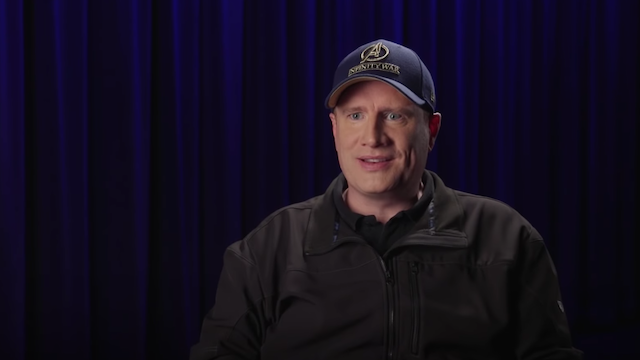 Weekend Watch: The Past, Present and Future of The MCU – According to Kevin Feige
  Noting that “professors lamenting about student writing is as old as professors and students,†Warner says that research indicates that “the number of errors in student writing have been largely consistent over time.†Warner dismisses the often-hypothesized idea that technology is to blame for modern students’ writing problems, noting: “If anything, t echnology is causing students to write more than ever before.†New technology, Warner says, actually offers professors “an opportunity…when it comes to helping students learn to think and write in the ways we would like them to in academic contexts.â€