quinta-feira, 3 de janeiro de 2019

Writing in essays is a common way to find out how well a student has understood the topic. The essay is a wide-ranging script (length determined by the examinee on a case-by-case basis) written on the basis of the given source papers and which should address the subject sufficiently broadly within the headline. The author of the essay must therefore combine the headline requirements, the reference work of the source works and their own ideas as original arguments. It is very easy for us now I can get services to write my essay and trust me this service is cheap as well.

In write my essay, the author must describe, analyze and evaluate the theories, concepts, and opinions of source works. Requirements for a fake writer are often also the comparison and interpretation of source material.

It is important to learn at the beginning of university studies also the practices of scientific writing. These include, for example, the source list and the source references.

The listener expects above all that the author of the essay focuses on the essentials and stays on the subject. He assumes that the essay is based on a thorough and critical reading of source works, and that the essay is consistently argued, both fluently and clearly presented.

Since the essay writer requires his own ideas and arguments, the essay material of the essay must be read critically and critically. All the material presented in the source work is not necessarily relevant to the essay and not everything that is printed on the book is necessarily true and correct.

Always do not give the essay writer a finished title that would guide the flow of the script. If it is hard to implement the "Read these books and write them down the essay", you should start by making a reference to the readable material. Using a referral, you can start evaluating your reading. Consider key concepts and their definition, the goals of the book, the theoretical background, the value world, the main arguments and their arguments.

The essay must be clear and coherent in structure. It is a good idea to build it into a three-part, the first being the introduction period, then the development phase and finally the decision-making phase. The parts of the essay actually reflect the frameworks of the essay itself, therefore ensuring that each part is written correctly in essence keeping the quality of the essay in the accepted standard.

The introduction should include a reader's interest in the beginning and the topic and the order of processing. The development section is where the title topic is actually dealt with: described, analyzed, compared, evaluated. If the title is such that it requires a response, yes or no, the question is dialectically examined from both positive and negative viewpoints in order to justify exclusion of the second option. Arguments and illustrative examples are supported in support of the claims. If the title of the essay is a question, the summary section will provide a reasoned answer that has been developed in the middle part.

Hopefully this article can help you to become a better writer than before. Anyway, thanks for your time and good luck!

[unable to retrieve full-text content]That's why experts say to start early and devote a significant amount of time and ... Applicants should also remove any fluff and jargon from an application and keep job descriptions and essays concis...

According to the International Labour Organisation, over 192 million people the world over are unemployed, and this number is expected to continue to rise steadily over time.

Essentially, there are not enough job openings for the growing number of people entering the job market. 

In Ghana, where nearly 48% of the youth, under 24 are unemployed, the government continues to explore ways of addressing this phenomenon. One of such initiatives, the Nation's Builders Corps, was inaugurated in October 2018, with the primary goal of creating employment avenues and opportunities for young graduates.

For fourth-year Electrical Engineering student, Justice Essuman, one of the ways to help solve this problem is through start-ups.

"Employment worldwide has been at an all-time low," he stated in a paper submitted to the World Bank. "The best solution developed for the problem has been the interest and studies surrounding start-ups and new enterprises. Most countries are now putting in place measures to help people with viable ideas start their own companies or organizations. The essence is to create new jobs, promote competition and spur innovation."

Justice's paper was one of three selected out of over 600 entries, as part of a World Bank competition held for university and college students to propose real-life examples of how governments, cities, firms, individuals, or any other actors can take advantage of opportunities created by technology and the future of work.

In the paper, he also compared how successful economies create enabling environments for start-ups, and made suggestions for how developing economies can take advantage of the this wave. 

"Countries can benefit from the start-up wave in many ways," he shared. "For developing countries especially, there is the need to refine the skillset of the labor market by restructuring the educational curriculum for basic, secondary and tertiary educational institutions. There should be an unrelenting emphasis on Design Thinking, Problem Solving, and Entrepreneurship. The system should be capable enough to provide important lessons on these areas and how to translate the knowledge into building entrepreneurial ventures that have a better chance at flourishing"

Click to read Justice's paper. On graduating, Justice hopes to help start a charging network company to welcome electric vehicles to Africa.

quarta-feira, 2 de janeiro de 2019

Students around the world are looking for help with the personal statement on their college applications. Most students are at a loss when it comes to finding the right topic – one that successfully markets their candidacy for a spot at the college of their choice.

Part of the problem is that students are trolling the Internet in search of other students' essays, and as a result, they are writing about the same trite subjects that other students are writing about. That strategy will ensure that they fail at distinguishing themselves from other students.

Source: GradSchools.com

Equally problematic is that by studying other personal statements for clues about what to write, students are failing at the most important point of the personal statement, which is to provide an authentic narrative about themselves.

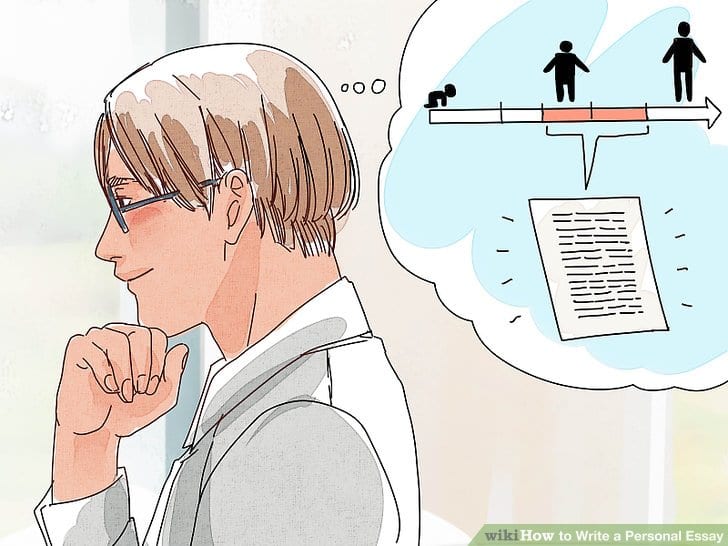
Don't get stuck on trying to be profound when you talk about an experience you've had that influenced you deeply. Most 17-year olds haven't had very dramatic lives (thank goodness!) and may feel as though nothing worth writing about has happened to them. However, it's not the experience itself that is significant; it's how you responded to it that reveals your character, motivation, and complexity, and those are traits that the Admissions Committee wants to hear about.

Source: wikiHow

You may have discovered the Free Writing technique in school. When you free write, you simply free associate thoughts without any concern about sentence structure, theme or even why you are writing. It's a form of meditation where you write down the random thoughts that come through your mind instead of letting them drift away.

As ideas start to come (and it will take more than a few minutes to get the creative juices flowing, so don't get worried if you draw a blank at first), write or type words or phrases that pop into your head. the more you write, the more ideas will occur to you. Somewhere in those ideas is a concept that reveals what really matters to you, and that will form the basis of your personal statement. Alternatively, you can also seek help from NerdyWriters. They provide reliable essay writing service at an affordable price point.

Source: Independent.ie

Why the Personal Statement EssayMatters?

It is well worth your while to submit a personal statement that reflects what is unique about yourself. Put yourself in the shoes of any member of the Admissions Committee; week after week of personal statements from students who share similar GPAs, SAT, ACT, LSAT, MCAT, GMAT or GRE scores, not to mention similar goals and motivations for attending the same school. The more competitive the school, the more similarities among the applicants, and the greater difficulty in differentiating yourself.

The Personal Statement has become increasingly important over time. An article in The New York Times cites an impressive stat from a survey by the National Association for College Admission Counseling: 26% of admissions officers deemed the personal statement of "considerable importance" in deciding who gets in, compared with only 14% in 1993. For those of you considering the more exclusive schools, be aware that the personal statement gives it more weight than even your GPA!

Source: prepadviser.com

There's only one way to approach this daunting task, and that is to create your own narrative about who you are and what makes you the unique individual you are. Think about one thing that really matters to you, and don't try to impress the Committee with filler activities or pretending to admire some historical figure you could care less about. Some of the best essays are about little things – insignificant events that tell the reader who you are.

[unable to retrieve full-text content]essay writing services Now, if you ever think about or else ... The Disagreement About Article writing Expert services Once you first start formulating your document you'll have all related informatio...

How can you ever really know if you're truly successful?

Maybe you're rich. Maybe you're famous. Maybe you've built something that improves the lives of people you'll never even meet.

Or, if you're Warren Buffett or Bill Gates, maybe you come to believe that the real definition of success has to do with your answer to a 9-word question.

Here's the question, how to answer it--and, while I'm nowhere near as successful as either man by most standards--here's where I think you'll agree that both Buffett and Gates got it at least partly wrong.

9 simple words

He's been taking stock of his life on an annual basis like this for years. Over time the questions he asks himself have become more existential and profound.

Two people have honed his thinking most, he writes: his wife Melinda Gates, and Buffett, whos contribution is his soul-rendering, success-defining question: "Do the people you care about love you back?"

"I think that is about as good a metric as you will find," Gates writes.

Fascinating, right? Start with the fact that Gates, the second-wealthiest person in the world, still ponders whether he's truly successful. And when he does so, he turns to the thoughts of the third-wealthiest man.

The places it takes them both are intriguing, too.

Money, fame, innovation -- all of it takes a back seat in Gates's and Buffett's minds to how well you've managed your personal relationships. Do you truly love anyone, and do they love you back in turn?

'The clearest message' (and 1 little problem)

But, I think there's a problem. I think the 9-word question is a bit insufficient.

Sure, it squares with what we've heard time and again in almost every research study that has examined these kinds of questions. Take the Harvard Grant Study, for example, the 80-years-and-counting longitudinal study of 724 members of Harvard University's class of 1938.

"The clearest message" of the study, according to the Harvard professor running it, "is this: Good relationships keep us happier and healthier. Period."

But the 9-word question about whether other people love you puts the definition of your success in their hands (or maybe their hearts).

It judges you by others' reactions, not to what you do yourself. I'm not even sure it's answerable, anyway. Can yo truly know what someone else  feels?

You can have faith, and trust, and I hope that most of us do. But knowing is a different matter.   

The true beauty

Perhaps that's why after posing Buffett's question, Gates never actually answers it.

He talks about other worthy questions, of course: "Did I devote enough time to my family? Did I learn enough new things? Did I develop new friendships and deepen old ones?" 

And he talks about progress in five worthy, practical areas he's worked on:

  • supporting Alzheimer's research
  • helping to eradicate polio
  • working toward breakthroughs in clean energy
  • staving off the next health epidemic, and
  • exploring the ethics of gene editing. 
  • They're all admirable endeavors. They're all unfinished.

    And they make me think that maybe Gates (and maybe Buffett) understand something else that isn't quite articulated here.

    It's that the "am I successful?" question can never truly be answered. Not while we're still alive anyway. Not while we're still working. Perhaps not finally, definitively, ever. But that's the true beauty, right?

    Because if you can never quite define total success, it means you also probably cannot ever truly, finally fail.

    You can only keep doing the work, making progress, and maintaining your trust and faith--and your hope. The only answer that emerges is that you have to keep going.

    Decluttering makes for a good move.

    The off-season months of December and January can be the best periods to move if you’ve got some flexibility, the rental marketplace Apartment List notes: While there may be slimmer pickings than there are during the summer, “rent prices tend to plateau or decline, offering cheaper rents than other times of the year.” And it just so happens one of the five most popular New Year’s resolutions is getting organized, according to data from Google by iQuanti.

    But the process of decluttering doesn’t come easily to many of us. The average American is hanging on to 23 items for which they have no use at all, according to a 2017 ClosetMaid survey of 2,000 people; 57% said they kept things for sentimental reasons, while a third procrastinate throwing things out. Meanwhile, research has linked clutter to heightened stress and diminished focus.

    If you’re looking to downsize your personal belongings for an upcoming move, or just looking to clean house at your current pad, here’s advice from professional organizers on how to make the process as painless as possible:

    Tackle low-hanging fruit first. Start by scraping off the top from wherever you see surplus, professional organizer Andrew Mellen told Moneyish, perhaps by going through your ill-fitting or unflattering clothes, old magazines, junk mail or kitchen stuff. “What we’re looking for is the easiest stuff to get rid of,” he said. Think of the things that don’t tug at your heartstrings when you imagine discarding them.

    Pull everything from your closet and throw it onto your made bed, professional organizer Regina Lark said, then go through each item with a critical eye. If you think you may need a particular item someday, try and envision what specific occasion “someday” might be. If you think you’d look cute in something if you lost a little weight, consider whether you’re on any sort of weight-loss plan. “It’s coming up with specific or measurable ways to decide if you’re going to use it someday, or if you’re going to fit into it someday,” she said.

    Enlist help from an objective friend with the promise of pizza and wine, Lark added â€" someone who’ll be honest and tell you what never looked good on you in the first place. Budget in ample time for putting things back and reorganizing what’s left.

    Consider what the clutter is holding you back from, professional organizer Julie Morgenstern, author of “Time to Parent,” told Moneyish. If you’re trying to make space for creativity in the next chapter of your life, for example, it’s hard to write, paint or use your imagination if your apartment is cluttered. If you want to make room for connection, a cluttered home might keep you from having company over. Whenever you get stuck on a particular item, Morgenstern said, ask yourself what’s worth more to you: that object, or having the space to fulfill those goals?

    Block off decluttering time on your calendar well before your move-out date creeps up, said Lark. Professional organizer Julie Naylon also recommended setting timers while you sift through, as “it’s very easy to get distracted in your stuff.”

    Have a plan for where discards will go. If an item still has utility and isn’t broken, Mellen said, donate it. Pre-arrange the recipients of the donations, how you’ll transport them, and when these giveaways will take place, Morgenstern said. Make sure the items actually leave your space instead of making it to your next apartment â€" otherwise, she said, you’ve just moved the clutter instead of releasing it. Knowing that unwanted items can go to someone who needs them often serves as a strong motivator, Naylon added.

    Declutter by category, not by room. Go through each room and group like items together, Naylon said, like sweaters, paperwork, shoes and medicine. This method helps weed out duplicates along with expired or outdated items â€" plus, “once you see how much you have, it’s much easier to let go,” she said. “It’s in that category you are identifying which of those (items) are obsolete, and which of those in that category belong in the next chapter of your life,” Morgenstern said.

    Ask yourself which items you’d miss if they were all gone tomorrow, she added: In your book collection, for example, would you miss books from your childhood, the classics or books you’re currently reading?

    Don’t procrastinate on deciding whether to toss something. “How long do you want to prolong the process? Do you want to spend this time twice?” Mellen said. “Are you confused, or are you just lazy? … If you’re confused, then that’s one thing, but if you’re just letting yourself off the hook and you’re going to come to the same conclusion, make the decision now â€" because you’re just eating up time.” Make all keep-or-toss decisions before the move, he added, since inertia will set in once you schlep it all to your new place.

    Instead of asking questions like “What if I need it in the future?,” ask whether the item supports the life you want to lead now, said professional organizer Shira Gill. “I think people keep so much stuff that they don’t actually need or use in their life that’s taking up precious real estate in their living spaces because of that ‘What if?’ thinking,” she said. Rather than clinging to old camping equipment or knitting supplies, for example, trust that you’ll be able to recreate that experience for yourself if you return to it in the future.

    With sentimental memorabilia, consider whether that particular object is the best representation of that life period, person or moment, Morgenstern said. “If it’s the best representation of it, you keep it,” she said. “If it’s not … you don’t need every representation of that period of life. You need the best.”

    Learn from your purge. “Don’t do this to yourself again,” Mellen said. “You really should feel the weight of being responsible for crap in your life, so that you make smarter, more strategic, curated choices going forward â€" so that you don’t recreate this for yourself, and then the next time you move, you have to deal with it again.” The next time you’re mulling over a new acquisition at a store, a friend’s house, a trade show or on the street, he said, be mindful of what it means to bring more things into your life.

    See the world with cash-color glasses. Get a weekly digest of personality finance: features, pop-culture and essays. Sign up here.